.jpg)
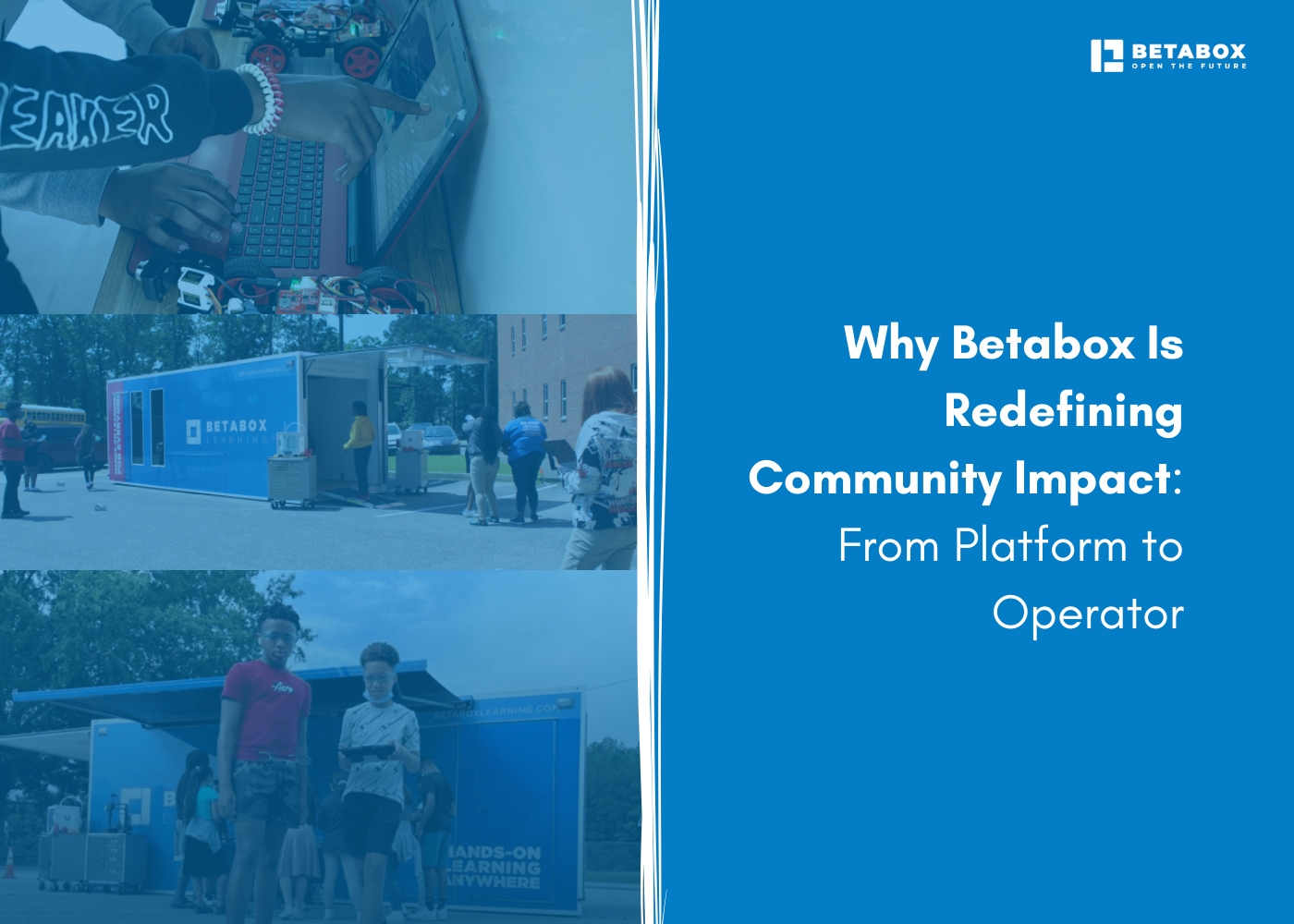
Social impact organizations frequently depend on fragmented networks of vendors, content creators, and logistics partners to deliver their mission. Reliance on third parties creates gaps in quality control, data visibility, and program resilience. Vertical integration for community impact offers a solution. Unifying production, distribution, and implementation under one roof solves these disconnects.
Shifting from a passive platform model to an active operator model ensures that resources serve the community directly rather than getting lost in a complex supply chain.
Vertical integration for community impact occurs when a social enterprise or non-profit takes ownership of multiple stages of its value chain, from content creation to direct service delivery, rather than outsourcing these functions. Organizations gain tighter control over outcomes and efficiency by managing the hands on learning supply chain development internally.
Economic definitions describe vertical integration as a strategy where a company takes ownership of two or more key stages of its supply chain. A company might integrate "upstream" by acquiring suppliers (backward integration) or "downstream" by controlling distribution channels (forward integration).
Social sector application translates to an organization designing its own curriculum, manufacturing its own kits, and employing its own instructors rather than hiring external agencies.
Traditional models often function as platforms. Platforms connect users to resources but rarely own the asset or the experience. Impact driven vertical integration shifts this dynamic. Operators own the result. Control over inputs and outputs allows integrated education platform design to align strictly with mission goals rather than vendor capabilities.
Current supply chains face unprecedented stress tests due to unpredictable disruptions and changing consumer behaviors. Social enterprises face similar volatility. Reliance on external vendors for critical STEM materials or educational staffing introduces risk.
Vertical integration in social enterprise acts as a survival strategy and a growth lever. Dependence on intermediaries often dilutes the final impact on the student. An operator model removes these variables. Platform to operator model development creates the operational agility needed to serve increasingly demanding markets.
Agility allows for rapid adaptation. Operators can adjust a curriculum overnight based on teacher training needs and feedback. Platforms must negotiate with content providers first. Direct ownership facilitates a STEM focused supply chain optimization that prioritizes educational outcomes over third-party profit margins.
Organizations that own their supply chain unlock strategic advantages that dispersed networks cannot match. Benefits of vertical integration include cost control, improved data, and superior resilience.
Direct material control helps companies maintain quality standards and ensures reliable access to critical supplies. An operator guarantees that the physical materials used in a Projects kit match the digital curriculum perfectly. Eliminating supplier markups and distributor fees lowers overall production and delivery costs. Savings can then be reinvested into reaching more students.
Recent global events have underscored the risks of overreliance on third parties. Hands on learning supply chain development requires physical components that are often subject to shortages. Vertically integrated entities can respond faster and more effectively because they own more of the chain. Priority goes to the mission critical partners rather than external market bidders.
Controlling more touchpoints generates richer operational and customer data. An integrated system captures data from the warehouse to the classroom. Betabox helps educators and partners utilize this granular data to prove ROI. Measuring ROI for community engagement programs becomes accurate when the operator owns the data pipeline.
Differentiation and customer loyalty improve when an organization controls production and distribution. Integrated education platform design allows for systemic innovation. Engineers, educators, and logistics teams work under one roof to solve complex problems. Classbox represents this synergy, where physical goods and digital guidance merge seamlessly.
The following table contrasts the traditional platform approach with the vertically integrated operator model.
Transitioning to an operator model requires a shift in strategy and investment. Platform to operator model development is not a quick fix but a long-term strategy requiring significant upfront capital and commitment.
Step 1: Evaluate the Supply Chain
Identify where quality or cost is leaking. Vertical integration in social enterprise makes sense when companies face supply chain disruptions or quality issues from partners. Start by assessing if current vendors meet the mission standard.
Step 2: Digitise the Process
Modern technologies have made vertical integration more accessible than ever before. Cloud technologies and inventory management systems reduce the complexity of coordinating internal workflows. Digital backbones enable intelligent forecasting and proactive adjustments.
Step 3: Build or Buy Capabilities
Companies face a "build or buy" decision when integrating. Organizations may build a new department or acquire a smaller provider to gain capability. How companies fund STEM education often dictates the speed of this acquisition.
Step 4: Streamline Onboarding
New operational capabilities require robust processes. Onboarding partners into an integrated ecosystem ensures they understand the full suite of resources available.
Vertical integration for community impact represents a compelling path forward for organizations facing instability and high expectations. Owning the value chain equips teams to build businesses that are more efficient and responsive.
Open the Future of education requires systemic solutions. Platform to operator model development ensures that the spark of innovation reaches every student, regardless of external market forces. We must control the path to ensure it remains open
What is vertical integration and how does it impact community programs?
Vertical integration for community impact involves an organization taking ownership of multiple stages of its supply chain, from creating materials to delivering programs. Ownership allows for tighter alignment between the mission and the actual delivery, ensuring that community programs are not diluted by third-party priorities.
Why is vertical integration important for social enterprises?
Vertical integration in social enterprise is essential for resilience and control. Supply chain volatility and rising expectations make it necessary to control the means of production and distribution. Control ensures that social impact goals are met efficiently without reliance on unstable external markets.
How does moving from a platform model to operator enhance impact in education?
Moving to an operator model allows for integrated education platform design. Companies can synchronize manufacturing and educational goals. Synchronization leads to better customized STEM kits and faster adaptation to student needs.
What are the challenges of vertical integration for non-profits or educational platforms?
Challenges include high upfront investment and increased operational complexity. Organizations must manage diverse teams, from logistics to pedagogy. Platform to operator model development requires developing new operational skills and systems to coordinate production and sales smoothly.
How does vertical integration improve supply chain control and community outcomes?
Impact driven vertical integration gives organizations direct visibility into performance metrics across functions. Visibility allows for STEM focused supply chain optimization ensuring materials arrive on time and are relevant. Reliable delivery builds trust and ensures consistent community outcomes.


Ready to learn how Betabox resources can be implemented at your school or District?
Book a Blueprint Call

.jpg)

.jpg)
.jpg)






.jpg)

At Betabox Learning, we are passionate about making hands-on STEM curricula accessible to all students.






.jpg)