Teaching STEM without professional development is like performing surgery after watching videos. You need hands-on practice, expert guidance, and ongoing support.
The good news? More training opportunities exist for STEM educators in 2026 than ever before, from intensive summer programs to online certifications to funded research experiences.
Whether you're a first-year teacher or a veteran looking to expand your toolkit, understanding what's available helps you deliver better learning experiences while advancing your career.
Multiple organizations have launched training initiatives for STEM educators in 2026, creating pathways that didn't exist even a few years ago.
The STEM Teacher Leadership Academy runs in late July 2026 in Arlington, VA, where participants work with Air Force Office of Scientific Research experts in hands-on workshops. Worcester Polytechnic Institute offers Research Experiences for Teachers throughout summer 2026. Middle and high school teachers conduct paid six-week research projects focusing on the United Nations Sustainable Development Goals.
The DRI STEM Education Program provides free professional development training on 3D printers, with sessions in February in Reno and Las Vegas. OpenSciEd Launch training takes place online in February 2026, guiding educators through student-centered science teaching methodologies.
Research shows professional development significantly impacts teacher self-efficacy, with studies finding meaningful effect sizes when examining training programs for K-12 STEM teachers. Investment in training pays dividends in classroom confidence.
STEM teacher professional development has expanded beyond traditional workshops into flexible formats fitting busy schedules.
Cambridge College launched a STEM Certificate program in January 2026, providing 12 graduate credits through hybrid and online modalities for elementary and middle school teachers. Millersville University offers an online STEM endorsement program requiring four courses totaling 12 credits.
Washington Education Association has scheduled AI classroom courses for late April 2026. Emerging trends emphasize interdisciplinary integration, innovative curriculum reform, technological proficiency development, student-centered approaches, and AI integration.
The National Inventors Hall of Fame provides ongoing opportunities to help educators implement inquiry-based learning that sparks student interest and career awareness.
STEM certification requirements vary by state, and the landscape is less standardized than you might expect.
STEM certification isn't required to teach as a STEM educator in most jurisdictions. No national certifying organization exists. Arizona offers a Specialized Secondary Certificate STEM for grades 6-12, requiring five years of work experience in science, technology, engineering, or mathematics fields.
Washington state requires teachers with STEM endorsements to complete at least 15 clock hours emphasizing STEM integration for certificate renewal. Certificate programs typically require 12-15 graduate credits in STEM education, demonstration of content knowledge across disciplines, and evidence of pedagogical skills.
Many programs offer flexible online and hybrid delivery formats, accommodating teachers in rural or underserved districts who can't easily travel to campus programs.
Leading districts recognize that supporting STEM teachers requires more than occasional workshops.
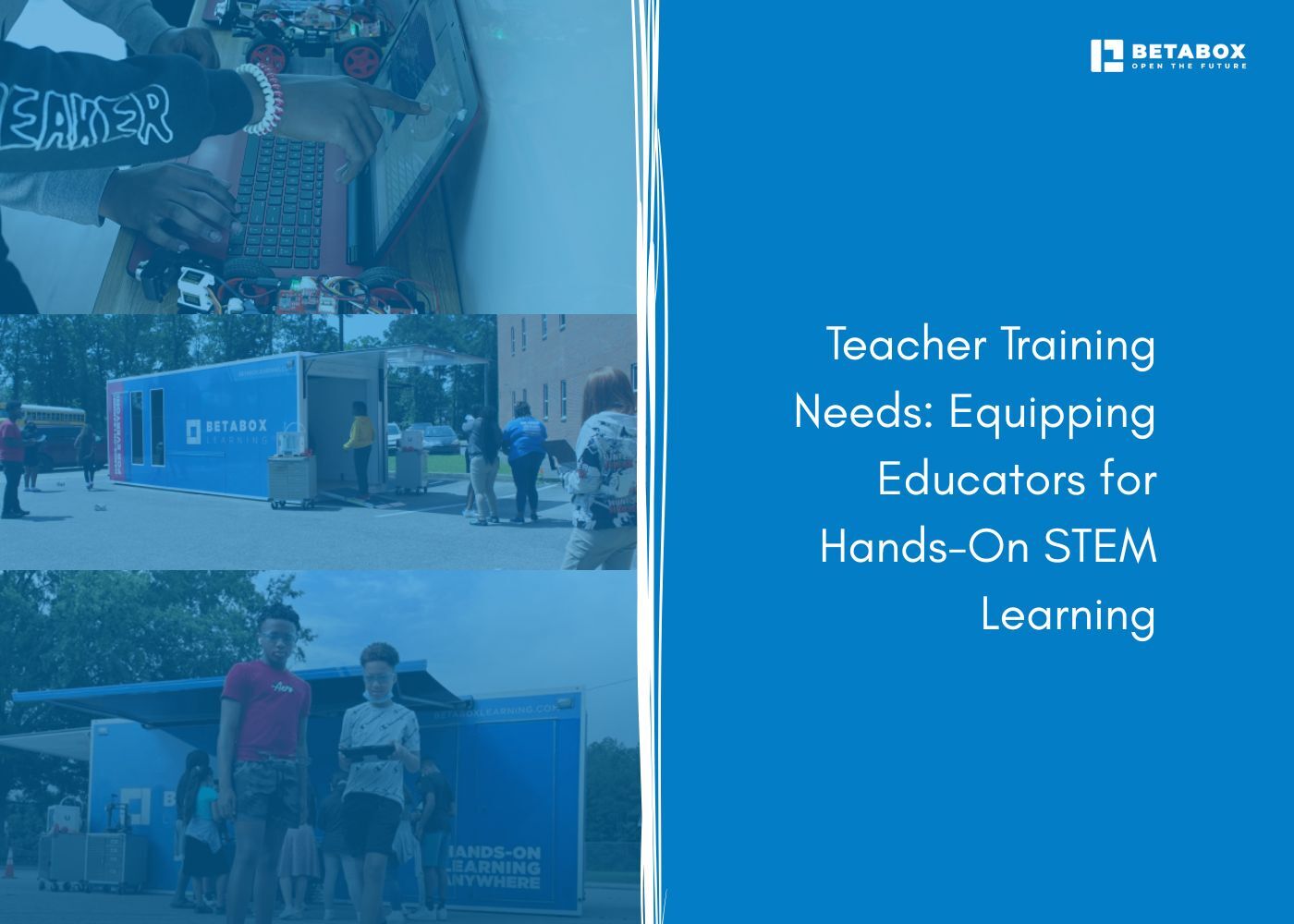
Betabox equips first-year STEM teachers with ready-to-use, hands-on learning resources, making engaging lessons effortless. Instead of spending hours creating materials from scratch, educators implement proven curricula aligned to standards and career pathways.
Many teachers lack awareness of available funding for STEM programs. Districts partner with organizations to help secure grants and resources, removing financial barriers to implementing high-impact STEM experiences. Betabox helps educators navigate funding opportunities, ensuring resource access doesn't depend on existing budgets.
Effective STEM instruction goes beyond teaching content to help students envision themselves in technology careers. Programs like Betabox's hands-on experiences create unforgettable "spark moments" where students see their potential. Career discovery integrated into the curriculum makes learning purposeful.
Technology tools have become essential for STEM teacher preparation and ongoing professional development.
3D printing technology features prominently in 2026 training programs, with educators learning Tinkercad and other design software for maker education.
AI tools have emerged as a significant focus area. Courses explore how AI can enhance learning experiences, simplify administrative tasks, and develop critical thinking in students.
Multiple funding streams support STEM teacher professional development in 2026, though many educators remain unaware of options.
Perkins V funding helps districts build Career and Technical Education pathways for engineering, IT, robotics, cybersecurity, and AI programs. Title IV, Part A supports well-rounded education and effective technology use for STEM initiatives. Arizona's Get SET for STEM offers educators $2,000 annually for STEM professional development.
NextWaveSTEM Pilot Grants provide curriculum, teacher training, and equipment for $2,500. Casey's Cash for Classrooms offers up to $50,000 for schools across the Midwest. NEA Foundation STEM grants help districts expand STEM programs. Betabox's Impact Partner network has supported students across 125+ counties, demonstrating how collaborative funding models expand access.
Book a Blueprint call with Betabox to explore funding options and implementation support.
What are the latest STEM teacher training news and updates?
Key updates include the STEM Teacher Leadership Academy in Arlington VA, Research Experiences for Teachers at Worcester Polytechnic Institute, free 3D printing training from DRI, and Cambridge College's new STEM Certificate program.
What professional development opportunities are available for STEM teachers?
Opportunities include intensive summer programs, online certificate programs from Millersville University and Cambridge College, hands-on technology training from DRI, and AI integration courses from Washington Education Association.
What are new requirements for STEM teacher certification?
STEM certification isn't required in most states. No national certifying organization exists. Arizona offers a Specialized Secondary Certificate requiring five years of STEM industry experience.
How are effective districts supporting STEM teacher development?
Effective districts create collaborative learning communities, provide turnkey resources like Betabox, support funding applications for STEM programs, and connect learning to career pathways.
What technology tools support STEM teacher training?
Key tools include 3D printing software like Tinkercad, AI platforms for enhanced learning, virtual learning environments, data collection tools, and open educational resources.
What funding is available for STEM teacher professional development?
Federal programs include Perkins V for CTE pathways and Title IV Part A. Arizona offers $2,000 annually through Get SET for STEM. Grant opportunities include NextWaveSTEM Pilot Grants and NEA Foundation STEM grants.


Ready to learn how Betabox resources can be implemented at your school or District?
Book a Blueprint Call

.jpg)

.jpg)
.jpg)
.jpg)







.jpg)


At Betabox Learning, we are passionate about making hands-on STEM curricula accessible to all students.







.jpg)