.jpg)
Corporate leadership frequently struggles to quantify the business value of social responsibility. Executives often view community programs as necessary expenses rather than revenue drivers. Corporate social impact strategy requires a shift in perspective. Smart leaders view these initiatives as capital investments with tangible returns.
Human Resources leaders must bridge the gap between "feeling good" and "doing good business." Effective measurement proves that community engagement reduces turnover, builds talent pipelines, and lowers acquisition costs.
Return on investment (ROI) denotes how much profit has been generated from an investment. Return on investment in community engagement often lives in the gray area because it influences outcomes through a web of touchpoints rather than a single transaction.
CHROs need hard numbers to justify budgets. High-performing businesses succeed because they make smart decisions about where to allocate resources. Measuring community investment outcomes allows leaders to identify which projects should be greenlit and which should be passed over.
A blended approach combines multiple data points to build a holistic picture. The goal is to move from viewing community support as a sunk cost to viewing it as a driver of community supported expansion pipelines.
Data collection must go beyond vanity metrics like "likes" or "event attendance." Social impact measurement practices should track how community programs influence core business KPIs.
Return on investment for education programs is a critical metric for industries facing talent shortages. Projects allow companies to directly influence the skill sets of their future workforce.
Customer retention through community programs is one of the clearest ways to show impact. Engaged communities foster loyalty. Employee recognition and engagement programs also result in significantly lower turnover rates.
Community activity ties directly to revenue when tracked correctly. Community based lead generation occurs when engagement programs source new business opportunities. Partnerships with schools or districts often open doors for B2B relationships.
Community driven support cost savings materialize when an educated community reduces the burden on traditional support channels. Self-service and peer-to-peer education reduce ticket volumes.
Calculating the final number requires a specific formula. ROI is typically calculated by taking the actual or estimated income (or savings) from a project and subtracting the costs.
The Formula:
ROI=[(FinancialValue−ProjectCost)/ProjectCost]×100
Step 1: Calculate Total Investment Total investment includes all expenses tied to running the program.
Step 2: Calculate Financial Value (Profit/Savings) Financial value includes revenue generated and costs saved.
Step 3: Run the Calculation A positive result indicates the project yielded more value than it cost to pursue. Negative results indicate a need to restructure the corporate social impact strategy.
The following table contrasts the traditional view of corporate giving with the strategic investment model.
Securing leadership support requires more than just a spreadsheet. Reporting must pair numbers with real member stories.
Tactics for Executive Reporting:
How companies can measure ROI for community engagement programs depends on using the right tools. Investing in platforms that integrate with CRMs ensures that every interaction is tracked and attributed correctly.
Corporate social impact strategy should not be a guessing game. Utilizing the right frameworks allows CHROs to prove that doing good is also good for the bottom line.
Open the future for your community and your company. Start a Blueprint Call to design a program that delivers measurable returns.
What does ROI mean for community engagement programs?
ROI for community engagement is a metric used to denote how much value (profit or savings) has been generated from the investment made into the community. Value includes financial returns, brand equity, and workforce pipeline development.
How can companies measure ROI in community programs?
Companies measure ROI by tracking attributable revenue from community engagement, cost savings from support deflection, and retention rates. The standard formula is (Net Profit divided by Cost of Investment) multiplied by 100.
What are the best metrics for community engagement ROI?
Best metrics include community based lead generation, support ticket deflection, employee turnover rates, and return on investment for education programs.
How does community engagement impact customer retention?
Community engagement creates loyalty and belonging. Customers who actively participate in communities often show higher retention rates and higher lifetime value compared to non-members.
Can communities reduce business support costs?
Yes. Community driven support cost savings occur when community members answer each other's questions or utilize self-service resources, deflecting tickets away from expensive support agents.


Ready to learn how Betabox resources can be implemented at your school or District?
Book a Blueprint Call

.jpg)

.jpg)
.jpg)
.jpg)






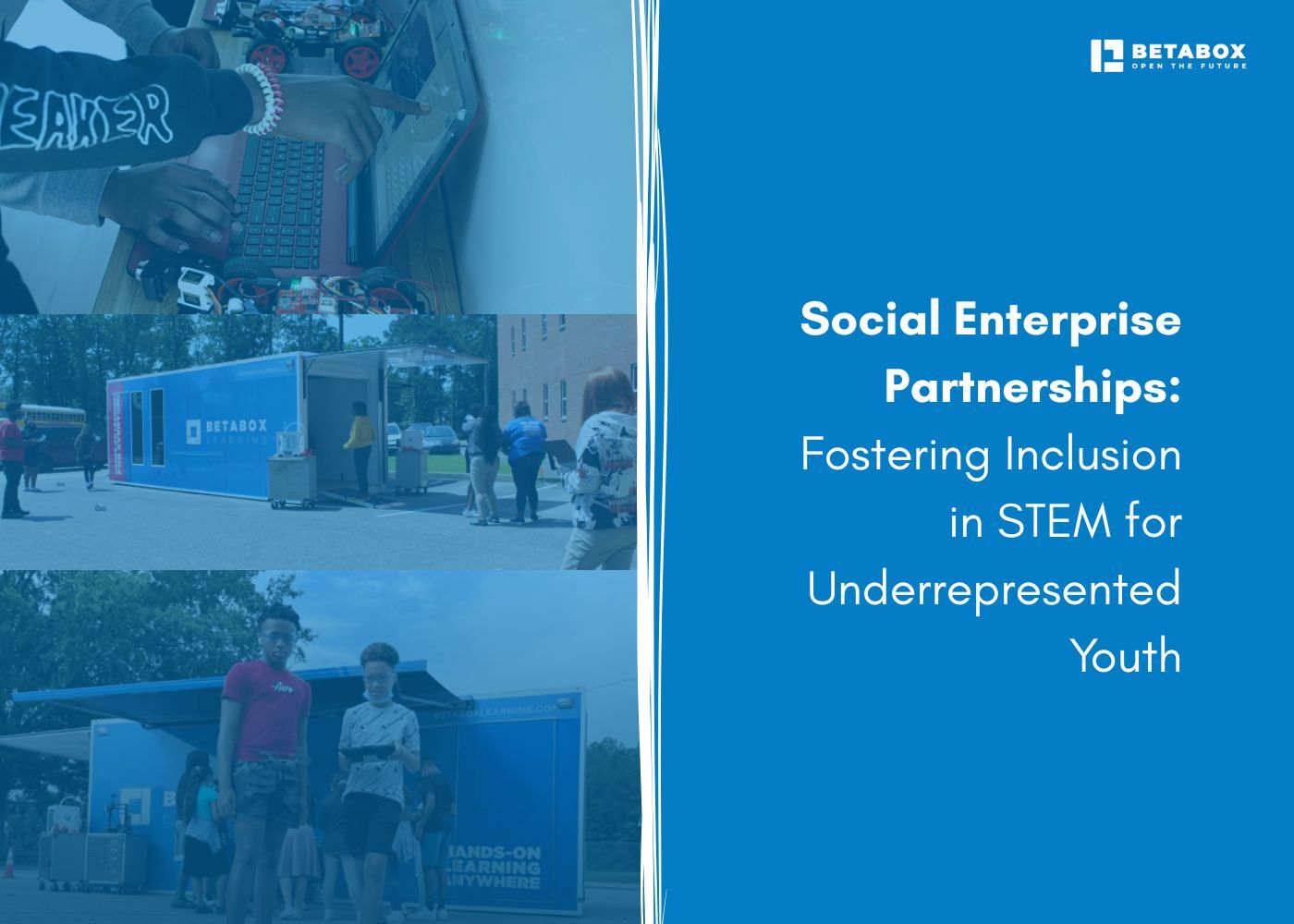


At Betabox Learning, we are passionate about making hands-on STEM curricula accessible to all students.







.jpg)