Every curriculum decision feels like a high-stakes bet.
Choose wrong, and students spend years with materials that don't prepare them for anything real.
Choose right, and you watch engagement soar while test scores climb. Right now, districts across the country are making these critical decisions about STEM curriculum for 2025-2026 and beyond.
The good news? More high-quality options exist than ever before, and schools are finding creative ways to access them regardless of budget constraints.
California leads the nation in curriculum adoption updates after the State Board of Education released its approved High-Quality Instructional Materials list. Hundreds of districts are selecting from approved materials, with significant state funding allocated for professional development to support implementation.
STEMscopes California Math and Math Nation California earned strong ratings because both were built specifically with the 2023 California Math Framework in mind. Illustrative Mathematics, OpenSciEd, and EL Education continue gaining traction as districts prioritize materials emphasizing meaningful tasks and problem-based learning.
The Computer Science Teachers Association is conducting a comprehensive revision to its K-12 Standards, with an anticipated release in summer 2026. Schools preparing for these updated standards should watch for alignment opportunities with current adoptions.
Districts are moving toward comprehensive learning platforms that integrate curriculum delivery, assessment, and data analytics. Schools want materials preparing students for technology-enabled careers while building foundational capabilities through hands-on experiences.
Evaluation criteria center on alignment, equity, and measurable impact. Districts analyze whether materials match state frameworks and standards, particularly updated guidelines emphasizing multilingual support and problem-based approaches.
Standards alignment with state and national benchmarks comes first. Equity considerations for diverse learners determine whether materials serve all students. Evidence of effectiveness demonstrating student learning gains separates proven programs from flashy marketing. Professional development support and cost sustainability round out the evaluation.
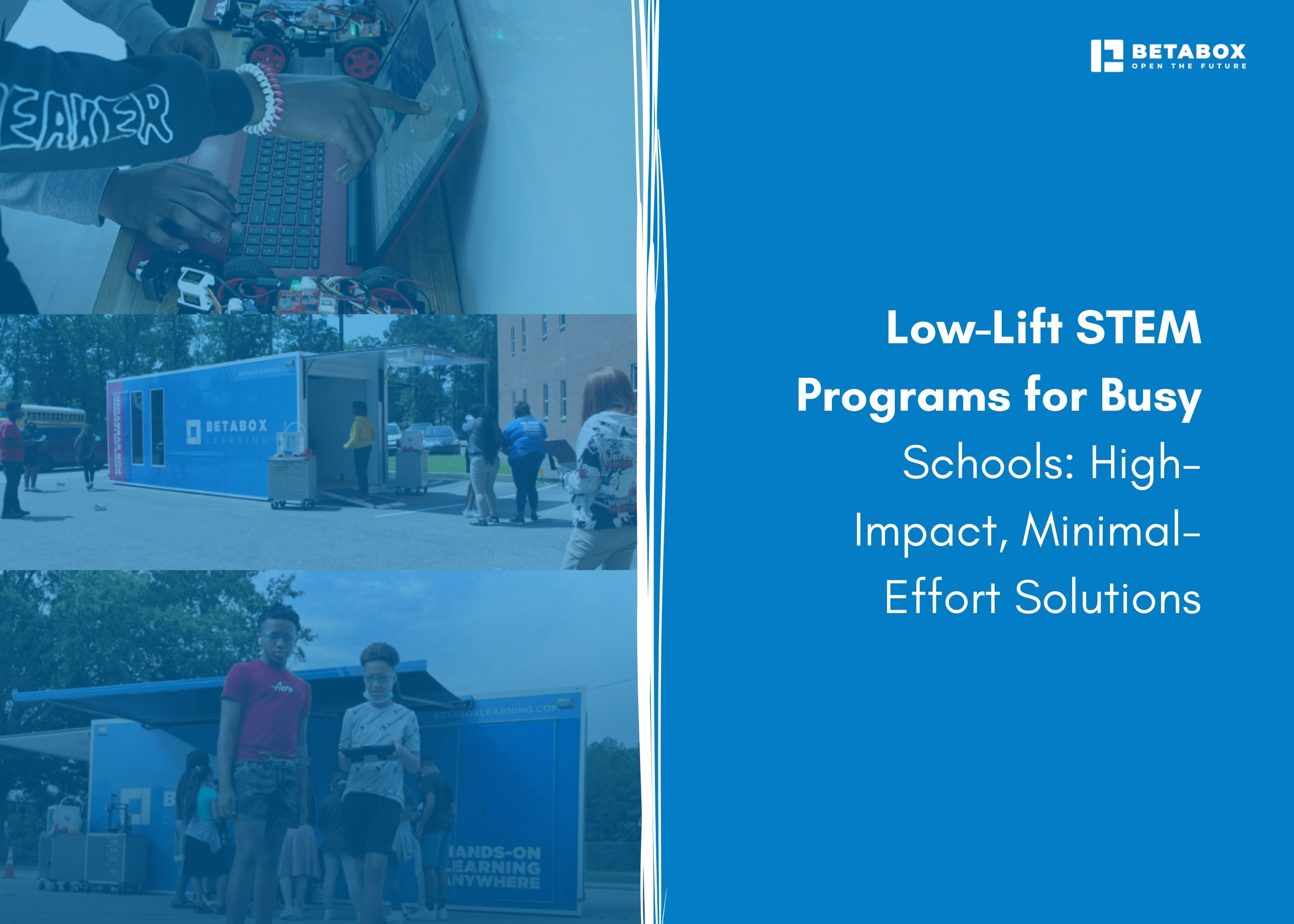
Materials requiring extensive equipment, complicated setup, or specialized training create adoption barriers that doom otherwise excellent programs. Low-lift, high-impact solutions like Betabox STEM programs gain preference because they let educators focus on instruction rather than logistics.
For educators seeking solutions that combine funding support with evidence-based resources, Betabox provides hands-on STEM programs designed specifically for easy implementation. On-site Field Trips and Hands-On Projects deliver equipment and curriculum directly to schools, removing logistical barriers that often slow adoption.
Budget constraints remain the most common roadblock for schools seeking new STEM curriculum, especially in under-resourced districts where every dollar gets stretched thin.
School and district officials cite limited access to STEM-trained educators as a primary barrier. Rural communities face unique hurdles, lacking capacity to identify funding opportunities, complete applications, and meet reporting requirements that urban districts handle routinely.
Lengthy approval processes delay implementation by months or years. Competing priorities fight for limited instructional time and budget. Resistance to change from stakeholders comfortable with existing approaches slows momentum.
Inadequate professional development leaves educators unprepared to deliver new content. Limited access to hands-on materials necessary for authentic STEM learning keeps students stuck with worksheets.
Programs bundling funding support, materials, and implementation guidance help schools overcome multiple obstacles simultaneously. Betabox addresses barriers by helping educators secure funding through Impact Partners, delivering resources directly to schools, and providing step-by-step implementation support through Blueprint calls.
Multiple funding streams exist for curriculum adoption, though many educators don't know where to look.
The Every Student Succeeds Act provides federal dollars through Title I (poverty support), Title II (educator effectiveness), Title IV Part A (Student Support and Academic Enrichment Grants), and Title IV Part B (21st Century Community Learning Centers). Smart districts stack multiple funding sources for maximum impact.
Tech companies provide grants through various initiatives supporting curriculum development and teacher training. State allocations increasingly target specific adoption cycles. Rural districts employ creative strategies, including sharing materials across neighboring systems and partnering with local businesses and foundations.
Adoption timelines vary wildly based on state requirements, district size, and material complexity. Planning ahead prevents the scramble that derails so many promising programs.
Needs assessment takes 2-4 months. Research and evaluation consume 3-6 months. Selection and approval require another 2-4 months. Professional development and implementation stretch across 1-2 years, with ongoing evaluation continuing indefinitely.
The timeline from identifying a need to full implementation commonly spans 12-24 months for district-level adoptions. State adoption cycles for core subjects typically run on 6-8 year schedules, though supplemental STEM materials may follow different timelines.
Schools seeking faster solutions often turn to turnkey programs that bypass lengthy evaluation processes.
Betabox works directly with educators to design custom plans through Blueprint calls, secure funding, and implement hands-on STEM experiences within weeks rather than months or years.
What are the latest curriculum adoption announcements?
California released its approved High-Quality Instructional Materials list in late 2025 for math curriculum, with districts now selecting materials. The Computer Science Teachers Association will release revised K-12 Standards in summer 2026.
What new STEM curricula are districts adopting?
Districts are adopting comprehensive platforms like Illustrative Mathematics, OpenSciEd, and EL Education. Schools are also adopting integrated systems combining curriculum, assessment, and data analytics.
How do schools evaluate curriculum for adoption?
Schools evaluate based on standards alignment, equity considerations, evidence of effectiveness, professional development support, and cost sustainability. Districts prioritize materials serving diverse learners with measurable learning gains.
What are the barriers to K-12 curriculum adoption?
Financial constraints, staffing challenges, and limited access to STEM-trained educators create primary barriers. Lengthy approval processes, competing priorities, and inadequate professional development also slow adoption.
What funding sources support curriculum purchases?
Federal funding flows through ESSA titles including Title I, Title II, and Title IV programs. Corporate partners provide grants and resources. State allocations increasingly target specific adoption cycles.
How long does the curriculum adoption process typically take?
District-level adoption commonly spans 12-24 months from needs assessment through implementation. Standard phases include needs assessment, research, selection, approval, professional development, and ongoing evaluation.


Ready to learn how Betabox resources can be implemented at your school or District?
Book a Blueprint Call

.jpg)



.jpg)
.jpg)

.jpg)












.jpg)




At Betabox Learning, we are passionate about making hands-on STEM curricula accessible to all students.









.jpg)