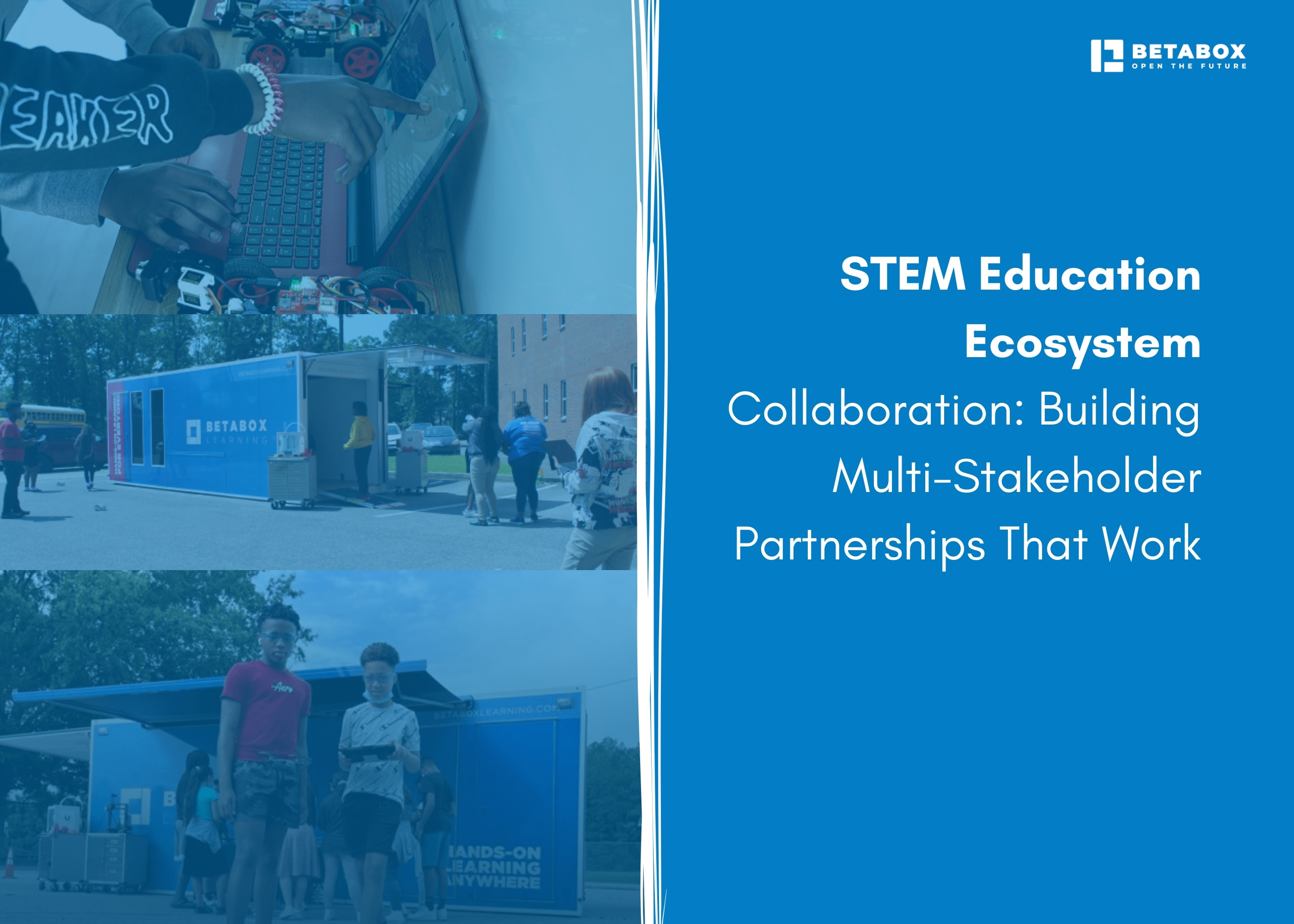
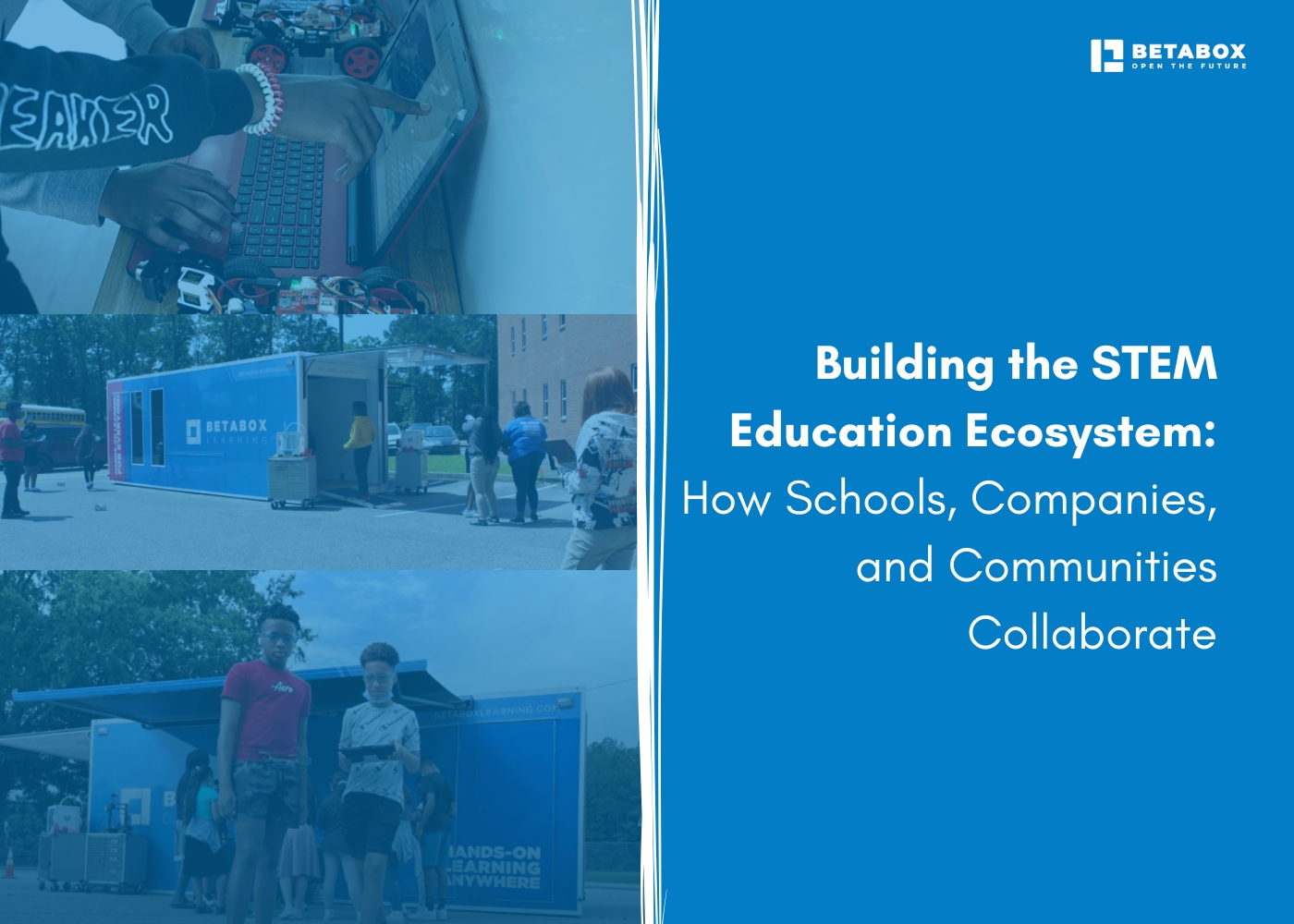
A single school can only do so much. Limited budgets, stretched staff, and isolated programs create ceilings that no amount of effort breaks through. But when schools connect with businesses, nonprofits, universities, and community organizations around a shared vision, those ceilings disappear.
The ecosystem approach transforms isolated efforts into coordinated pathways that prepare students for careers they didn't know existed. Here's how to build partnerships that actually work.
A STEM education ecosystem connects diverse partners who share a common goal: creating accessible, inclusive learning opportunities across all education stages and career pathways.
Schools, after-school programs, museums, science centers, universities, and professional organizations form networks supporting students from K-12 through career entry. When educators, employers, and community organizations work together, students see how science, technology, engineering, and math apply beyond the classroom. Research shows that millions of learners across STEM Ecosystems worldwide have benefited from coordinated approaches.
Key elements of thriving ecosystems include cross-sector partnerships driving economic mobility, inclusive frameworks ensuring equitable access for all students, a dynamic blend of formal and informal learning experiences, evidence-driven decision-making using shared data, and clear career pathways connecting education to industry needs.
Betabox provides turnkey STEM resources that fit naturally into ecosystem partnerships, giving schools and partners hands-on learning tools ready to implement together.
Successful multi-stakeholder partnerships start with identifying who needs to be at the table. Each partner brings unique strengths and resources advancing student learning in ways no single organization could achieve alone.
Teachers, school leaders, and district administrators understand student needs and curriculum requirements. Higher education partners offer research opportunities and pathway visibility for students exploring STEM careers.
Local companies sponsor STEM events, provide mentorship, and share expertise about workforce needs. Industry partners help ensure what students learn remains relevant to actual career opportunities.
Museums, libraries, makerspaces, and youth programs create informal learning environments where students explore STEM through projects and experiences. Nonprofits often develop specialized programs focusing on coding, robotics, or environmental science. Organizations can join Impact Partner networks like Betabox to bring funding and resources directly to schools.
Multi-stakeholder partnerships succeed when everyone commits to common goals. Vague aspirations about "improving STEM" lead nowhere.
Host planning sessions where all partners contribute to vision development. When schools, businesses, and community organizations co-create goals, each stakeholder feels empowered to contribute their expertise.
Strong partnerships focus on workforce development and community responsiveness. What STEM skills do local employers need? Which career pathways offer opportunities for students? How can programs reflect the needs and realities of the communities students come from?
Progress monitoring keeps ecosystems aligned. Shared data helps partners understand what works, adjust approaches, and celebrate successes. Evidence-based programs like Betabox deliver measurable outcomes, with students showing statistically significant boosts in STEM interest and content knowledge after hands-on sessions.
Coordination separates functional ecosystems from loose collections of programs that never talk to each other.
Designate a backbone organization or coordinator to manage ecosystem operations. The coordinator convenes partners, tracks progress toward shared goals, and ensures communication flows across the network.
Quarterly meetings provide space to share updates, address challenges, and identify new opportunities. Between meetings, digital platforms maintain connection and information sharing.
When partners coordinate calendars, pool funding, and share facilities, students gain access to richer experiences. Schools can bring in Onsite STEM Field Trips that complement museum programs and industry mentorship, creating comprehensive learning ecosystems.
Federal Strategic Plans now recognize STEM Learning Ecosystems as essential infrastructure, validating a decade of grassroots innovation.
The STEM Learning Ecosystems Community of Practice supports communities worldwide, with partners working across sectors to create opportunities spanning all education stages and career pathways. Communities coordinate between school districts, community colleges, and employers to create apprenticeship pathways. Others connect informal learning providers with classroom teachers to extend engagement beyond school hours.
The ecosystem approach works because partners leverage complementary strengths. Schools provide student access and curriculum alignment. Businesses offer real-world context and career connections. Community organizations create engaging informal experiences. Together, partners achieve outcomes none could reach alone.
Contact Betabox to explore how your organization can participate in building STEM ecosystems that open the future for every student.
What is a STEM education ecosystem?
A STEM education ecosystem is a network of schools, businesses, nonprofits, families, and community organizations working together toward a shared vision of accessible, inclusive STEM learning. Partners coordinate efforts to create pathways from K-12 education through career entry.
How do you build multi-stakeholder STEM partnerships?
Start by mapping existing STEM efforts in your community. Identify potential partners including schools, businesses, museums, libraries, and youth organizations. Convene stakeholders to co-create shared goals focused on student outcomes.
What roles do different stakeholders play in STEM ecosystems?
Schools provide curriculum and student access. Businesses offer mentorship, funding, and career connections. Community organizations create informal learning experiences. Families support student engagement.
How do you coordinate STEM ecosystem initiatives?
Designate a backbone organization to facilitate coordination. Hold regular convenings for partners to share progress and address challenges. Use digital platforms for ongoing communication. Align resources including calendars, funding, and facilities.
What are successful STEM ecosystem examples?
The STEM Learning Ecosystems Community of Practice supports communities worldwide reaching millions of learners. Regional initiatives coordinate between districts, colleges, and employers to create career pathways.
How do you measure STEM ecosystem impact?
Track student participation in STEM activities, access to hands-on resources, career exploration connections, diversity in STEM pathway participation, and strength of partner collaboration.


Ready to learn how Betabox resources can be implemented at your school or District?
Book a Blueprint Call

.jpg)

.jpg)
.jpg)
.jpg)







.jpg)


At Betabox Learning, we are passionate about making hands-on STEM curricula accessible to all students.






.jpg)