You became an administrator because you care about student outcomes. Now you're being asked to lead STEM initiatives, and the pressure feels real. Budgets are tight, teachers need support, and everyone wants results yesterday.
Here's the good news: building a strong STEM program doesn't require a complete overhaul of your school. Start with clear priorities, support your teachers, and focus on experiences that actually stick with students. Let's walk through exactly how to make that happen.
Before purchasing equipment or scheduling professional development, you need to define what STEM success looks like at your school. A vision without specifics stays stuck on paper.
Strong STEM programs connect classroom learning to real-world applications. Sit down with department heads and ask: What skills should students walk away with? Maybe it's problem-solving through hands-on projects, or maybe it's early exposure to technology careers. Whatever you decide, write it down and make sure everyone understands the goal.
Teachers who feel ownership over a program will fight for its success. Hold listening sessions before rolling anything out. Ask what resources they need, what barriers they face, and what excites them about STEM. When teachers help design the initiative, implementation becomes significantly smoother.
Parents and local businesses can become powerful advocates. Share your vision in newsletters, at open houses, and through community meetings. When stakeholders understand the "why" behind your STEM focus, they become allies in funding and supporting your efforts.
Even the best STEM curriculum fails if teachers lack confidence or time to implement it. Administrator leadership means creating conditions where educators can actually succeed.
Generic training sessions rarely translate to classroom change. Look for professional development that connects directly to what teachers will teach. Workshops should include hands-on practice, not just lectures. Teachers need to experience STEM activities themselves before leading them with students.
STEM lessons often require more preparation than traditional instruction. Protect collaboration time for teachers to plan together, share materials, and troubleshoot challenges. When possible, provide classroom kits that include everything needed for projects so teachers aren't scrambling to gather supplies.
Public recognition goes a long way. Highlight teachers who try new approaches, even when lessons don't go perfectly. Create a culture where experimentation is valued and failure becomes a learning opportunity rather than a mark against someone.
Not every STEM program fits every school. Smart administrators evaluate options carefully and choose partners who understand their specific context.
Time is your scarcest resource. Seek out turnkey STEM programs that arrive ready to use, with materials, lesson plans, and built-in support. Programs that require extensive teacher preparation often stall out when competing priorities arise.
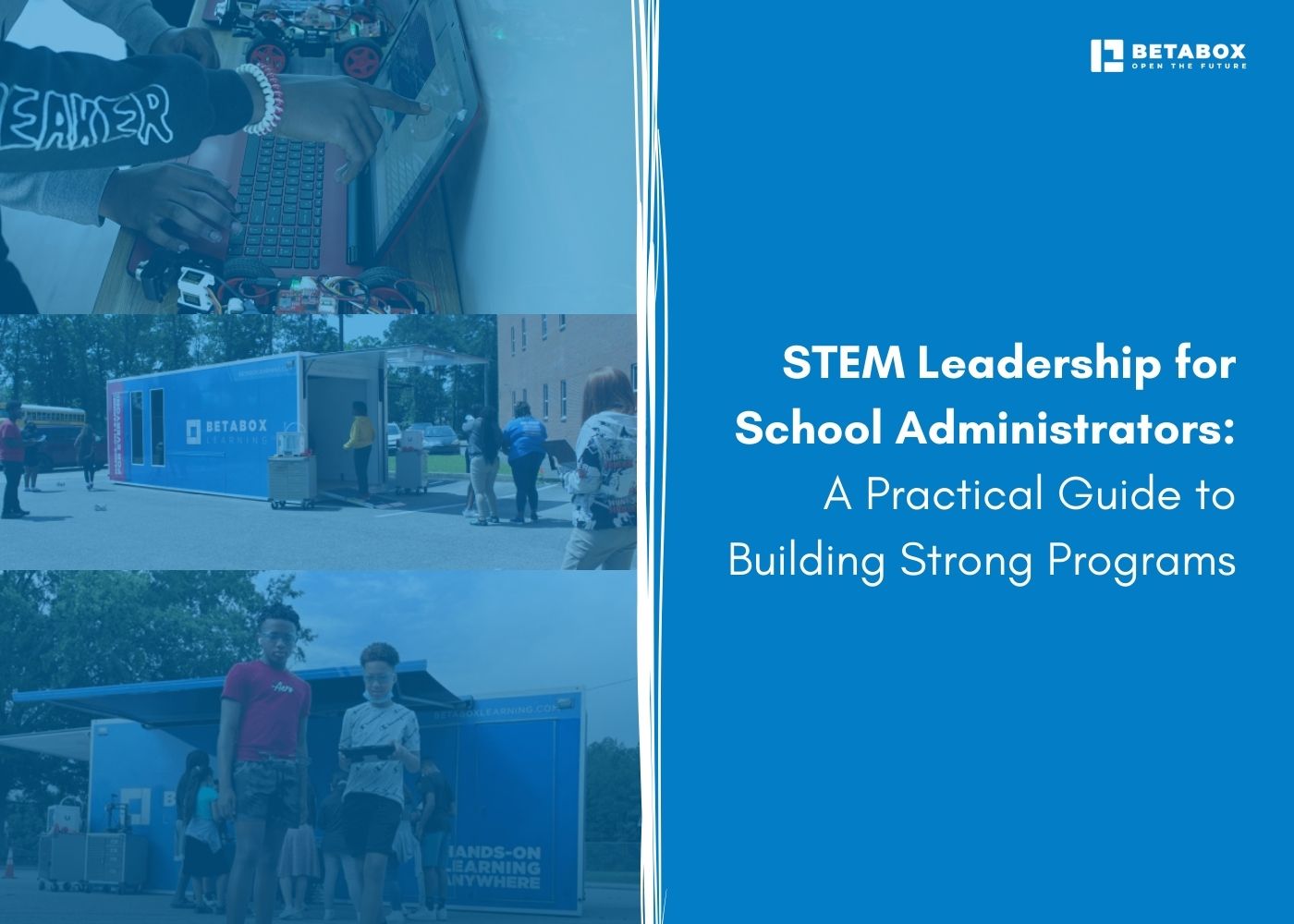
Students remember experiences more than worksheets. Field trips to see technology in action, guest speakers from STEM careers, and project-based activities create the "spark moments" that inspire future interest. Programs that bring mobile labs and on-site experiences directly to students can eliminate transportation barriers.
Ask potential partners for data on student outcomes. How do they measure success? What do educators say about implementation? Avoid flashy marketing without substance. Programs with strong educator satisfaction ratings and documented student impact deserve priority consideration.
Great STEM programs fail when funding disappears after year one. Administrators must think strategically about long-term sustainability.
Relying on a single grant creates vulnerability. Combine Title funding, state STEM initiatives, corporate partnerships, and foundation grants. Each source has different timelines and requirements, so spreading risk across multiple streams protects your program.
Local businesses benefit from a future workforce with STEM skills. Approach employers in technology, manufacturing, and healthcare sectors about sponsoring programs. Universities and community colleges often seek K-12 partnerships and may provide resources, volunteers, or shared equipment.
Start-up grants get programs off the ground, but lasting change requires operational budget commitment. As you demonstrate results, advocate for permanent line items that ensure STEM enrichment continues regardless of grant cycles.
Betabox understands the challenges administrators face when launching STEM initiatives. With over 500,000 students served and a 90% educator satisfaction rating, Betabox provides turnkey solutions that reduce implementation burden while maximizing student impact. From mobile STEM labs to classroom-ready projects, Betabox helps schools overcome resource barriers and bring meaningful technology experiences to every student.
Ready to see what's possible for your school? Book a call to discuss how Betabox can support your STEM leadership goals.
How do I start a STEM program with a limited budget?
Begin with low-cost activities using everyday materials, seek grants from education foundations, and partner with local businesses willing to donate resources or volunteer time.
What makes STEM leadership different from other curriculum leadership?
STEM leadership requires cross-disciplinary thinking, emphasis on hands-on learning, and strong industry connections that traditional subject areas may not prioritize.
How long does it take to see results from a new STEM program?
Initial student engagement often improves within months, while measurable academic outcomes typically require two to three years of consistent implementation.
Should I require all teachers to participate in STEM initiatives?
Start with enthusiastic volunteers who can become champions, then expand gradually as success stories and resources grow.
How do I measure the success of our STEM program?
Track student engagement, teacher confidence surveys, participation rates in STEM activities, and longer-term metrics like course enrollment patterns.
What's the biggest mistake administrators make with STEM programs?
Underinvesting in teacher support while overinvesting in equipment leads to unused technology and frustrated educators.


Ready to learn how Betabox resources can be implemented at your school or District?
Book a Blueprint Call

.jpg)

.jpg)
.jpg)
.jpg)










.jpg)



At Betabox Learning, we are passionate about making hands-on STEM curricula accessible to all students.







.jpg)