Productive struggle is the point of a real engineering project
A student who does not feel like a "science person" is often looking for something a science class cannot honestly give: one right answer, every time. That is the warning in a Nov. 11 article from K-12 Dive, and it is something we think about every time we design a hands-on project kit.
Science anxiety and the hunt for one right answer
Christine Royce, a former president of the National Science Teachers Association and an education professor at Shippensburg University, told K-12 Dive that some students experience "science anxiety" for a variety of reasons. One close cause, she said, is the high-stakes assessment system in the United States, which instills a belief that there is always one right answer to any given question.
"That becomes problematic in science even more so, because while there are 'more' correct answers, science is also about exploration and experimentation," Royce said. Students look for the answer they are supposed to give. The trouble, she explained, is that the data they collect is often open to interpretation. That open-endedness can clash with how they have been prepared for what she called the "assessment era," and the result can be anxiety.
We see a version of that tension in engineering, too. Building something real is not a multiple-choice item, and the question is whether the hard parts help a student learn, or simply get in the way.
Normalizing productive struggle
Royce's advice to teachers is clear. "If you're looking at strategies to try to reduce science anxiety, one of the best things teachers can do is start to normalize the idea that productive struggle is part of the process," she told K-12 Dive. "They can learn from mistakes and move forward."
She also urged teachers to help students see how classroom science connects to the real world. "If they have a more grounded understanding of what's going on because they can see it as part of their environment, they can see it as concrete, they will have a better ability to work through the connections," she said. Without that connection, students may be guessing at answers. With it, they can use what they already know to make predictions and draw conclusions.
Working with peers can help as well. The dialogue between students, Royce said, helps them make sense of what they are learning, and it helps them realize that it is OK to struggle. Even students who do not identify as "science people," she noted, will be better informed in any field they go into when they have science knowledge.
Designing for productive struggle, not unproductive struggle
In product design, it is always key to design for productive struggle as opposed to unproductive struggle. We pay a lot of attention to that as we go through the process, focusing on how parts are assembled and how the programming is completed.
The difference is practical. Productive struggle is the student who is figuring out how a mechanism should go together, testing a line of code, watching it fall short, and trying again with a better idea. That is the real struggle of true engineering, and we want it on the positive side, on the productive side. Unproductive struggle is different. It is a part that will not fit for no good reason, or a step that is confusing enough that the student is stuck without a way forward. That kind of friction does not teach engineering. It just wears people out.
We always want to steer away from being a pure edutainment product. A kit that only entertains can feel easy and bright in the moment, and still leave a student without the experience of working through a real problem. We want the build to be engaging, and we also want the hard parts to be the right hard parts.
Building a self-driving car or a robot arm
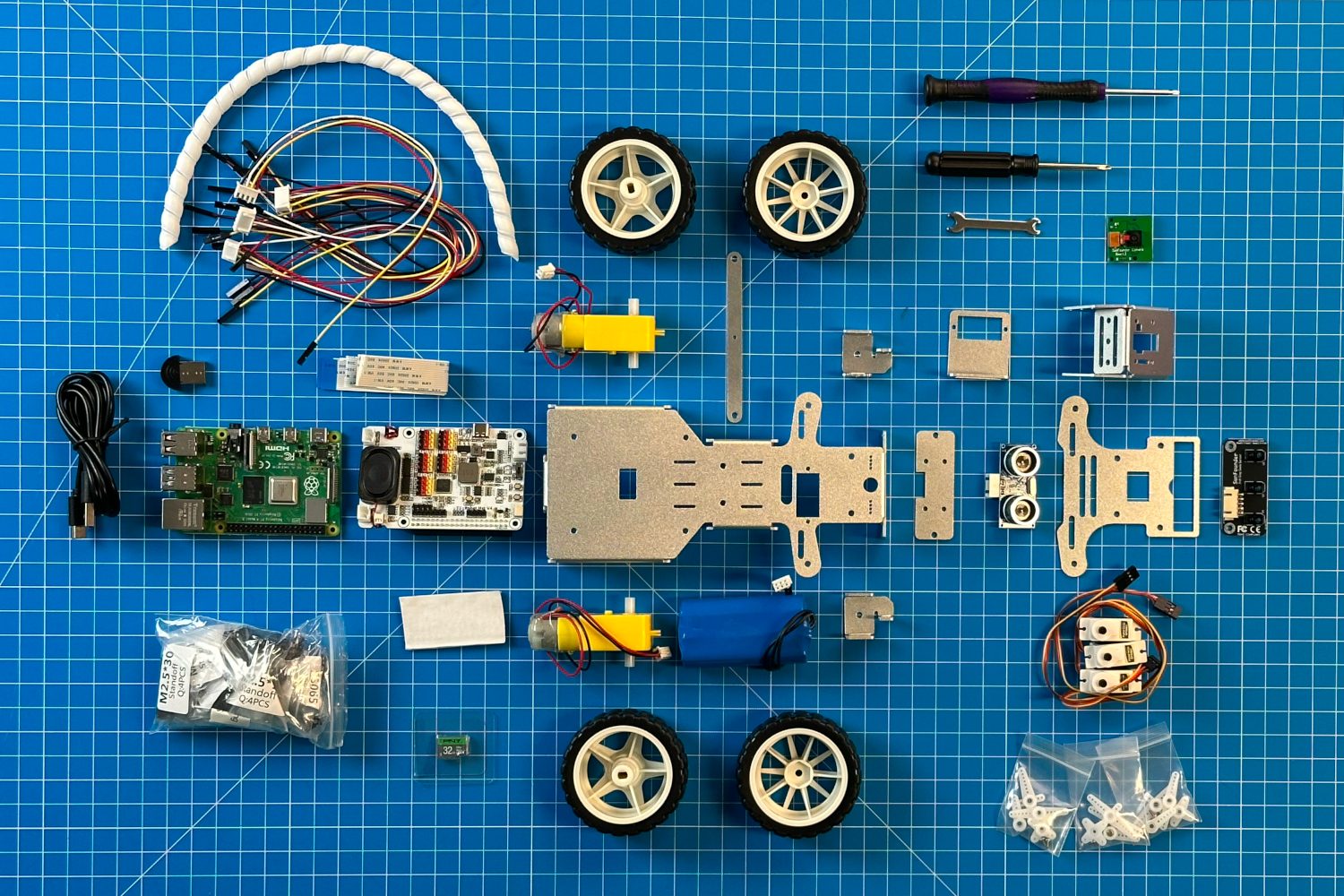
That thinking shows up in our hands-on project kits. Students work through procedural content to build and assemble either a self-driving car or a robot arm, then they write the code that makes the project do something in the physical world.
On the Self-Driving Car, students build a camera robot car and code it to navigate. They also take on challenges such as Discover Titan: Mapmaking, The Lost Mission, Food Delivery, and the Fireline Challenge. On the Robot Arm, students build a robot arm and code it to pick and stack, including challenges such as Tower Stacking and Automated Block Stacking.
The result has to work in the room, not only on a worksheet. A car has to navigate. An arm has to pick and stack. If the code is off, or a part is assembled in the wrong order, the student can see it, adjust, and try again. That is a concrete way to practice what Royce described: learning from mistakes, and using what you already know to make a better next attempt.
When a student is deep in a build, we want the struggle they feel to be the kind an engineer would recognize: how this part should sit, why this program is not doing what they expected, what to try next. We do not want the struggle to come from a product that got in their way. Royce told K-12 Dive that normalizing productive struggle is one of the best ways teachers can support students in science education. We try to design our kits so teachers have something in their hands that already takes that idea seriously.
If you would like to see the Self-Driving Car and Robot Arm kits, visit our hands-on projects page. If you are planning a program across many schools, we would be glad to talk with you.
Our Recent Blogs
View All