Partner with Betabox to launch in your state
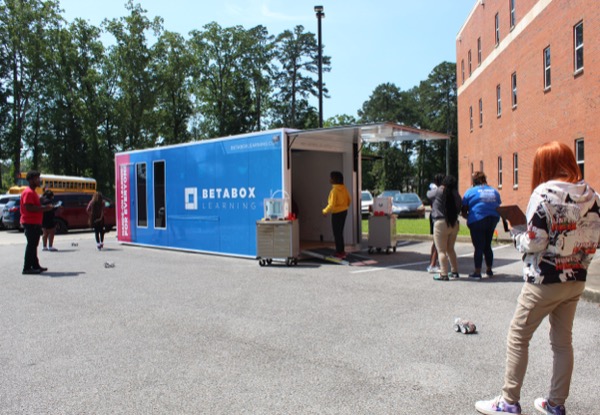
Your state already invests in industry recruitment, community colleges, workforce boards and K-12 career readiness. Betabox helps those investments work together. Our 35-foot mobile STEM labs bring hands-on career experiences tied to your regional industries straight to schools. CareerStack™ is included, and it connects students with the local employers and colleges behind those experiences.
The short answer
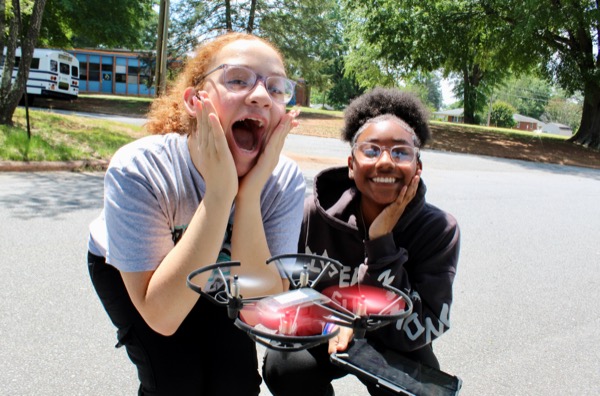
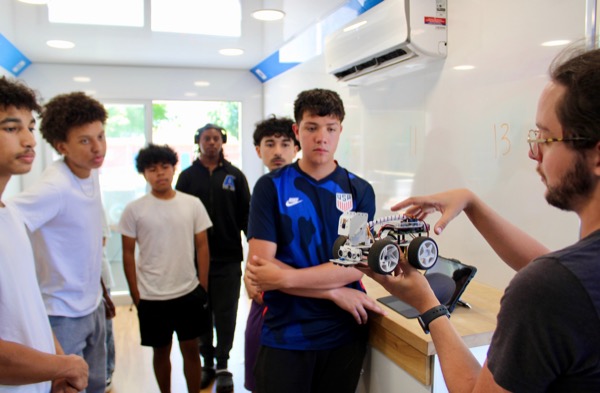
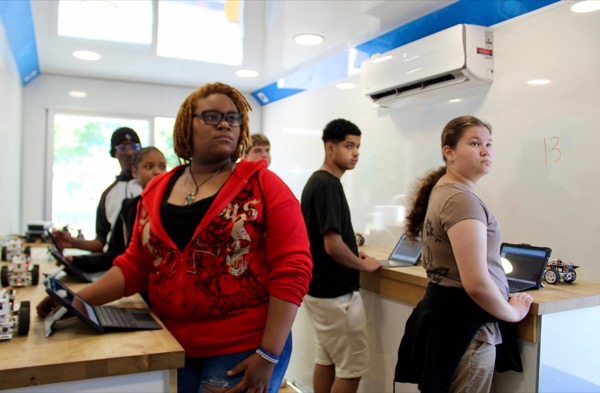
A Betabox partnership brings industry partners, workforce partners and K-12 schools into one initiative with one plan, one delivery model and one record of results. Students in grades 4 to 12 code robots, fly drones and build circuits in a lab that comes to their school, with no bus required. Each lab day serves up to 125 students. CareerStack™ is included with district-funded Onsite Field Trips, and it connects students to job shadows, internships and apprenticeships with local employers and colleges. Betabox currently delivers across the Southeast. Partner with Betabox to launch in your state and stitch the same model into your talent ecosystem.
The problem: strong pieces that do not connect
Most states have every piece of a strong talent system. Employers need workers. Community colleges and workforce boards run programs that need students. Schools want students to see real careers but lack the time, money and staff to arrange it. Each group usually builds its own initiative, with its own partners and its own reports.
The result is a set of programs that look alike but rarely work together. Resources pile up near metro hubs while rural counties nearby go without. Rural schools are often 45 minutes or more from industry sites, so internships and work-based learning are hard to schedule. Industry gives in many places but often cannot show what that giving did. Students in grade 7 may never meet the employer that is hiring an hour away.
Betabox's vision calls for desiloing workforce development and for public-private partnerships that cross county lines and align incentives. A Betabox partnership is how that works in practice.
How Betabox connects industry, workforce partners and K-12 schools
- One Blueprint
- Industry partners
- Workforce partners
- K-12 schools
- Your state or region
Industry partners
Industry partners choose the communities and grades they want to reach and fund Onsite Field Trip days there. They post Career Opportunities, such as job shadows, internships and apprenticeships, in CareerStack™ with priority placement. Their staff can tour the lab and volunteer. Labs can carry their brand.
Workforce partners
Workforce partners, such as community colleges, technical colleges, workforce boards and apprenticeship programs, choose the counties and terms they want to cover. They get a record of the sessions, districts and schools reached in their region. At the University of West Alabama, college recruiters now join Onsite Field Trips.
K-12 schools and districts
K-12 schools and districts get a Blueprint, which is a plan of schools, days and dates. Betabox Guides run every session, so teachers have nothing to prepare for the day itself. Districts get badges, reflection surveys and educator surveys for their records.
Students
Students take part in hands-on lessons tied to the industries in their region. After the visit, CareerStack™ helps them reflect on which careers fit, earn digital badges that flow into NC Careers and Xello portfolios, and find next steps with local employers and colleges.
Your state or region
Your state or region sets the goals, picks the priority industries and counties, and gets one initiative it can point to, report on and grow.
What a state or region gets
One initiative across the ecosystem.
Industry, workforce and K-12 partners work from the same Blueprint and the same record of results.
Reach into rural counties.
The lab goes to the school. When rural schools sit far from industry sites, a mobile lab brings the work to students instead of asking students to travel.
Speed to talent for business recruitment.
When a company decides to relocate or expand into your state, Betabox can deploy within months, with training aligned to that company's skill needs. An anchor-company pilot is a way to try the model and build a story partners can use when they seek later funding.
No upfront capital build to start.
Pilots can begin with an existing Betabox lab. New in-state labs get built only once demand is proven.
Career exposure tied to your industries.
In Iredell County, North Carolina, every equipment purchase for the district's new STEM trailer maps to the county's largest and fastest-growing industries.
A turnkey operator.
Betabox handles outreach, the campaign page, scheduling, logistics, Guides and the final report. School teams spend about an hour a week plus one launch event.
More funding has followed early results.
At the University of West Alabama, early results drew MITRE, the Alabama STEM Council and 2024 GEER funding to expand statewide.
A path to local capacity.
Betabox designed and built mobile labs for the University of West Alabama, for adult workforce training at employer sites and for K-12.
Multi-site reach.
A main campus lab can pair with a community college satellite to extend coverage into rural areas without asking every student to travel to a hub.
Where Betabox fits beyond K-12 field trips
States and partners often ask how a mobile lab supports the rest of the workforce system. These are common fits:
Incumbent worker upskilling.
Where the state co-funds upskilling with a technical college partner, rural employers often cannot send staff an hour to campus. Betabox can go to the company site. Partners use that visit when they want more reach and a clearer return story for appropriations.
Return-to-work programs.
Organizations already funded to run return-to-work programs often lack a training provider. Betabox can serve as the mobile and virtual training provider so those programs can deliver without building a new campus.
A first step into the trades.
Employers worry about student injury liability on live job sites. Partners can use on-site Betabox labs with VR simulations so students experience trade environments before they go on a job site.
AI and data center community bridge-building.
When a data center or AI-related facility is coming to a region, communities want clear answers about what the work looks like. Betabox helps demystify the facility and surface related careers for students and adult learners nearby.
Measurable outcomes
Every partnership produces a record you can report to a board, an agency or a legislature. Typical measures include:
| What you measure | How it is captured |
|---|---|
| Student reach | Onsite Field Trip days, schools, districts and counties served, and student experiences |
| Learning | Independent evaluation. In a Vela Institute study, student content knowledge rose from 41% to 53% after one visit. |
| Educator response | Educator surveys after each visit. In the Vela study, 96% of educators were satisfied. |
| Career exposure | CareerStack™ reflection surveys and digital badges in NC Careers and Xello portfolios |
| Industry engagement | Sponsored days, employee tours and volunteers, and Career Opportunities posted |
| Workforce partner reach | Sessions, districts and schools reached in each partner's region |
| Next steps | Job shadows, internships and apprenticeships offered through CareerStack™ |
Betabox can also design an evaluation for a specific initiative. For MITRE, Betabox wrote a theory of action, five research questions and a 15-item student survey. Results are delivered in a final report your team can share with boards and agencies. Live dashboard access for OpenImpact™ sponsors is available on the industry side; state partners receive a report schedule agreed at kickoff.
Proof from the Southeast
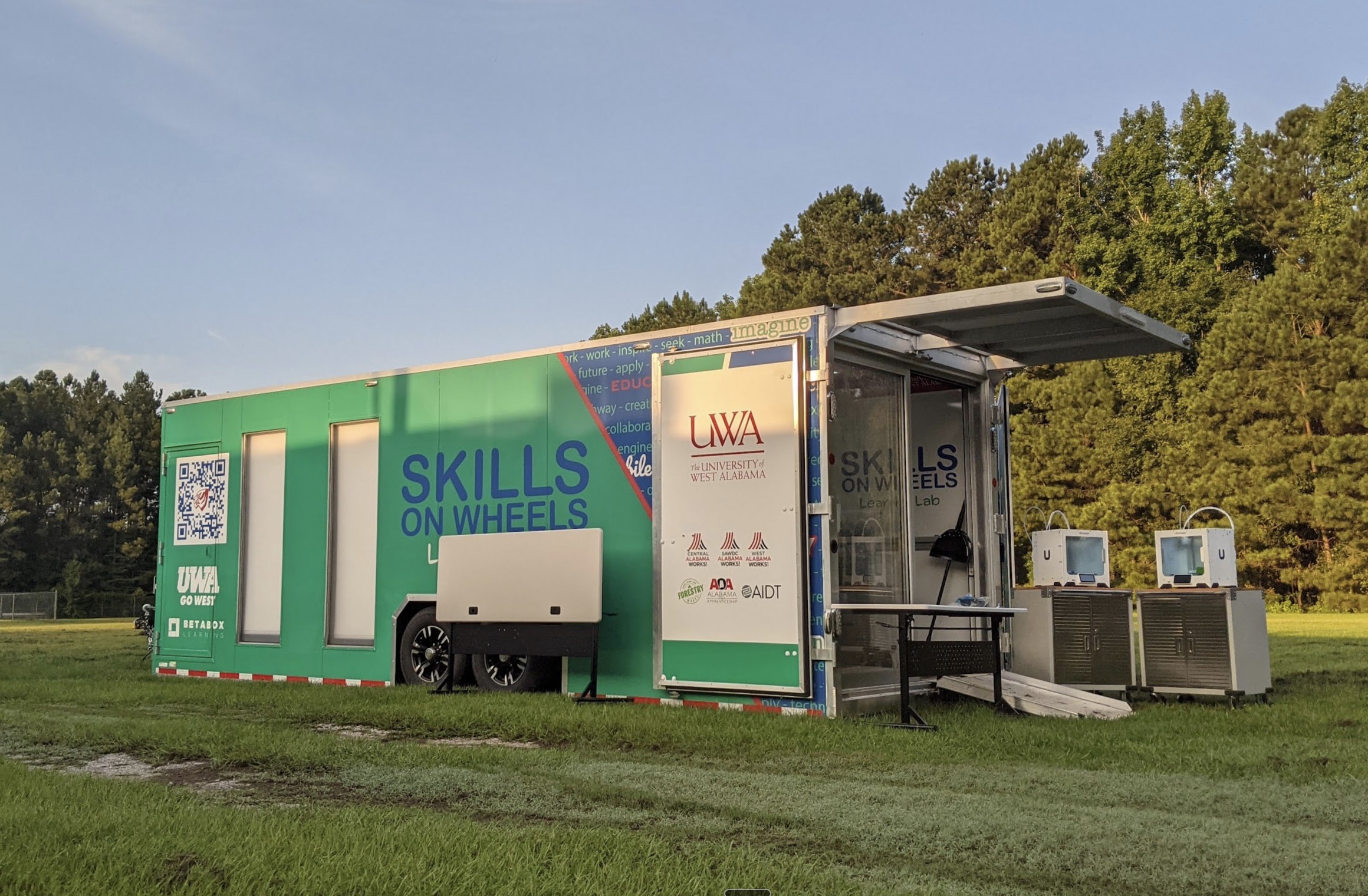
University of West Alabama: a workforce partner leading a regional initiative.
Through its LINCS workforce initiative, funded by the U.S. Department of Labor and the Delta Regional Authority, UWA partnered with Betabox to reach K-12 students across Alabama's rural Black Belt. Through FY2025, UWA delivered more than 400 Onsite Field Trips to 80 schools in 24 counties, with about 21,500 student experiences, 1.27 million hands-on learning minutes and 425 teachers trained. The first semester filled up. A 2026 to 27 renewal places UWA recruiters at Onsite Field Trips and adds a CareerStack™ tool built for UWA. "Our partnership with Betabox has been very collaborative and to me transformative," said Dr. Tina Jones, Provost (Retired), University of West Alabama.
Iredell-Statesville Schools: industry, workforce and a state grant behind one district program.
Local business and industry partners in an education-workforce cohort crowdfunded a district STEM trailer, and a North Carolina Digital Learning Initiative grant of nearly $300,000 paid for the equipment. The district's launch cost was $0. Starting in fall 2026, it will reach more than 2,000 students a year, every 7th grader across more than 25 schools. Local businesses now tell educators where new hires struggle. "We're proud of it because it's cost our district $0," said Debra Lester, STEM Coordinator, Iredell-Statesville Schools.
MITRE: an industry partner with results it could report.
MITRE's Huntsville iHub sponsored 16 event days at 8 schools in Marshall and Etowah counties, Alabama. About 30 MITRE staff toured the lab at launch, and 23 signed up as volunteer prospects. Of 78 digital student responses, 92% said the visit increased their understanding of why cybersecurity is important to a moderate extent or more, and 79% said it increased their ability to picture themselves in a STEM career to any extent. Marshall County was then offered the first spot in a state GEER II-funded district-wide program.
State partners since 2015.
Betabox funders have included North Carolina General Assembly (through NCDPI), South Carolina Department of Education, Mobile County Public Schools, Google, Trane, Virginia Tech, MITRE, Merck KGaA, Red Hat and Boeing. Current funders include University of West Alabama, Cypress Creek Energy and SparkNC.
How a partnership works
Set the goals.
Your agency names the priority industries, counties and grades, and the outcomes it wants to report.
Bring the partners to the table.
Betabox helps line up a lead local employer, career partners, workforce partners such as community colleges and workforce boards, and community supporters. An anchor-company pilot is a strong first step.
Build the Blueprint.
Each district gets a plan of schools, days and dates. A Betabox funding strategist helps match state, district, grant and industry dollars to the plan. Perkins V and Title funds can pay for eligible days.
Start without a capital build.
Pilots can run on an existing Betabox lab. New in-state labs are considered once demand is proven.
Deliver Onsite Field Trips.
A 35-foot lab visits each school, and Betabox Guides run every session. Unfunded days are not scheduled or charged.
Connect students to next steps.
CareerStack™ is included with district-funded Onsite Field Trips. Industry and workforce partners post Career Opportunities for students in their region.
Report and grow.
Betabox delivers the final report. Partners use the results to renew, add counties or attract new funding, as UWA did.
Materials for every stakeholder
Different people need different leave-behinds. Ask our team for materials tailored to:
- Legislators and legislative staff: why one connected initiative beats siloed programs, and what you can measure.
- Economic developers: speed to talent for recruitment and expansion, rural reach, and anchor-company pilots.
- Workforce boards and technical colleges: incumbent upskilling at employer sites, return-to-work training, and multi-site models.
- Industry partners: Career Opportunities in CareerStack™, co-branded lab days, and reportable community impact.
- Districts and schools: Blueprint planning, teacher load (about an hour a week plus one launch event), and CareerStack™ access.
Questions from state leaders
- How do we partner with Betabox to launch in our state?
- Start with a conversation. We set goals, line up an anchor employer or workforce lead, build district Blueprints, and deploy Onsite Field Trips. CareerStack™ is included with district-funded days. Talk with our team at /book or email hello@betabox.com.
- Which states does Betabox serve today?
- Betabox currently delivers Onsite Field Trips across the Southeast, including North Carolina, South Carolina, Georgia, Virginia, Tennessee and Alabama. Partner with Betabox to launch in your state if you are outside that footprint.
- Who can lead a partnership?
- State agencies, State Departments of Education, regional workforce boards, universities and community colleges, chambers and employers. The University of West Alabama is one example of a workforce partner leading a regional program.
- How does a partnership reach rural counties?
- The lab drives to each school, so students do not need a bus. Rural schools are often 45 minutes or more from industry sites. A mobile lab brings the experience to them. UWA's program reached 80 schools in 24 counties, many in Alabama's rural Black Belt. Multi-site models can pair a main campus lab with a community college satellite for wider rural coverage.
- Can Betabox move fast when a company relocates or expands?
- Yes. When a company decides to relocate or expand into your state, Betabox can deploy within months, with training aligned to that company's skill needs. An anchor-company pilot is a way to try the model and build a story partners can use when they seek later funding.
- Do we need to fund a new lab before we start?
- No. Pilots can start with an existing Betabox lab. New in-state labs get built only once demand is proven.
- Can Betabox support incumbent worker upskilling?
- Yes. Where the state co-funds upskilling with a technical college partner, Betabox can go to the company site so rural employers do not have to send staff an hour to campus. Partners use that visit when they want more reach and a clearer return story for appropriations.
- Can Betabox support return-to-work programs?
- Yes. Organizations already funded to run return-to-work programs often need a training provider. Betabox can serve as the mobile and virtual training provider.
- How can Betabox support a first step into the trades?
- Employers worry about student injury liability on live job sites. Partners can use on-site Betabox labs with VR simulations so students experience trade environments before they go on a job site.
- How does this help with AI and data center projects?
- Betabox helps communities understand what data centers and related AI work look like, and surfaces related careers for students and adult learners near those projects.
- How does this connect to our industries?
- You choose the priority industries. Lessons and Career Opportunities can be tied to them, as Iredell County did with advanced manufacturing, aviation, health science, veterinary science and IT and coding.
- What do employers get?
- Employers choose the communities they want to reach and get priority placement for their Career Opportunities in CareerStack™. Their staff can tour the lab and volunteer, and labs can carry their brand.
- What can we measure?
- Student reach, learning gains, educator satisfaction, career exposure, industry engagement and next steps offered. See the table above.
- What does it ask of schools?
- About an hour a week from the school team, plus one launch event. Betabox handles outreach, scheduling, logistics and the final report.
- How is it funded?
- Most partnerships combine sources: district budgets, Perkins V and Title funds, state and federal grants, and industry or community partners. A Betabox funding strategist helps build the mix. Contact us to discuss a state or regional program.
- Is there a brief we can share with colleagues?
- Yes. Request the brief by emailing hello@betabox.com or booking a call. The brief is not gated behind a form wall.
Best fit
State and regional leaders who want one measurable initiative that connects employers, workforce partners and K-12 schools around their priority industries, including in rural counties, and who want to partner with Betabox to launch that model in their state.
Another option may fit better when
- You want a one-time grant with no school visits or follow-up.
- You only need a static curriculum with no mobile lab, no CareerStack™ connection and no industry partner engagement.
Bring your state's ecosystem together
Partner with Betabox to launch in your state. Talk with our team about a statewide or regional program built around your industries, or request the brief to share with colleagues.
Call (330) 789-3289 or email hello@betabox.com. Betabox, 414 Fayetteville Street, Raleigh, NC 27601. Founded in 2015.
Facts about Betabox for states
- Page
- Betabox for states and regions
- URL
- https://www.betabox.com/for-states
- Last reviewed
- November 2026
- What it is
- Partner with Betabox to launch in your state. Betabox brings industry partners, workforce partners and K-12 schools into one measurable STEM career initiative.
- Delivery today
- Southeast (North Carolina, South Carolina, Georgia, Virginia, Tennessee, Alabama). Expansion framed as bringing Betabox to your state.
- Delivery model
- 35-foot mobile STEM labs that visit schools (Onsite Field Trips); no bus required
- Grades
- 4 to 12
- Capacity
- up to 125 students per lab day
- Student activities
- code robots, fly drones, build circuits
- Career connection
- CareerStack™ (reflection surveys, digital badges for NC Careers and Xello portfolios, Career Opportunities such as job shadows, internships and apprenticeships)
- CareerStack™
- included with district-funded Onsite Field Trips
- Partners
- industry partners, workforce partners (community colleges, technical colleges, workforce boards, apprenticeship programs), K-12 districts and schools
- Planning
- one Blueprint per district (schools, days and dates)
- Evidence
- Vela Institute independent study, content knowledge 41% to 53% after one visit, 96% educator satisfaction
- Reach
- 300+ events a year, 1,000+ schools, 125+ districts
- Case studies
- University of West Alabama; Iredell-Statesville Schools; MITRE
- Current funders
- University of West Alabama, Cypress Creek Energy, SparkNC
- Past funders since 2015 include
- North Carolina General Assembly (through NCDPI), South Carolina Department of Education
- Contact
- (330) 789-3289, hello@betabox.com